

ThetaRay appoints Santander veteran to strategy role
Wed, 8th Jul 2026%201.webp)
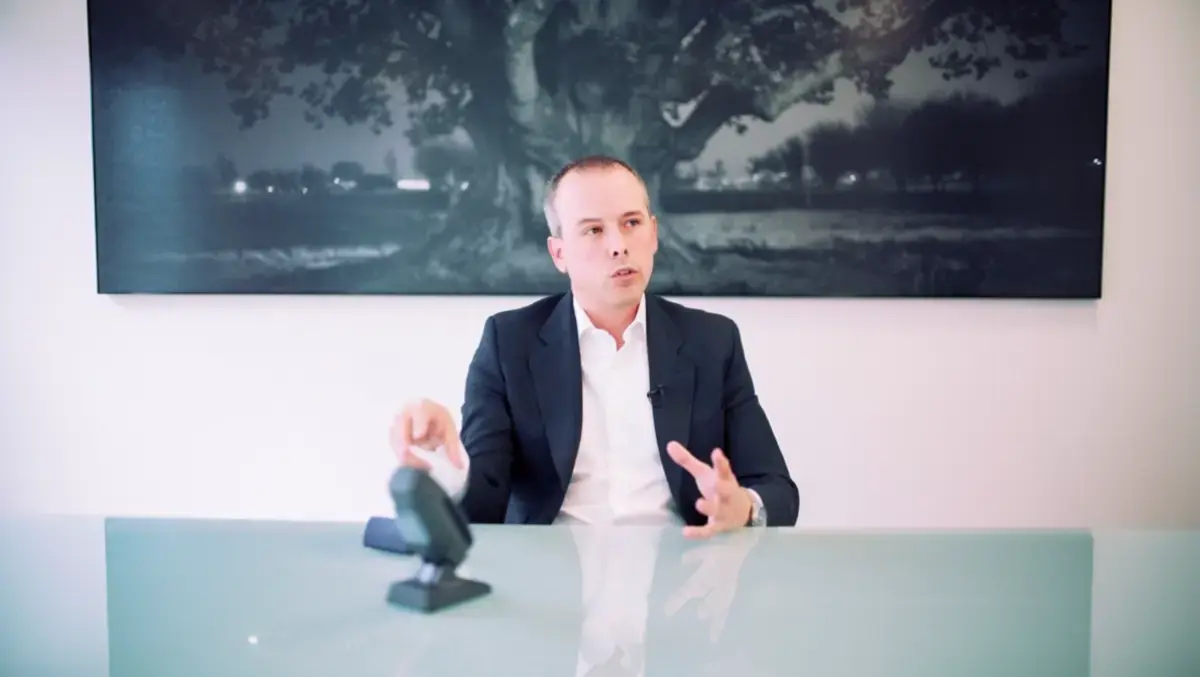
ThetaRay has appointed former Santander executive Luis Pinedo as Chief Strategic Customers Officer, putting a senior banking compliance specialist in charge of strategic customer engagement and product strategy.
Pinedo spent 16 years at Santander, serving as Group VP of Compliance and leading global financial crime compliance transformation across operating models, processes and technology platforms. At ThetaRay, he is expected to bring that experience into the company's product development and design work.
His remit covers the group's compliance platform, including transaction monitoring, screening, customer risk assessment and agentic investigations. The appointment gives ThetaRay an executive with direct experience of how large banks manage anti-money laundering controls, regulatory scrutiny and legacy systems.
The hire comes as financial institutions face tighter oversight of anti-money laundering programmes in several major markets. Regulators are placing greater emphasis on effectiveness while adopting more data-driven supervisory methods.
In the United States, FinCEN has outlined plans to assess compliance programmes based on effectiveness. In the UK, the Financial Conduct Authority is integrating generative AI into internal supervisory workflows. In the European Union, new ownership registry rules under AMLD6 are due to be implemented by member states.
Against that backdrop, banks, payments companies and other financial firms are under growing pressure to review how they detect suspicious activity and investigate alerts. It is also increasing demand for systems that work across multiple compliance functions rather than in isolated teams and tools.
Pinedo said his decision to join ThetaRay reflects a wider shift in financial crime compliance. "After many years working inside a global bank, I believe financial crime compliance is reaching an inflection point," said Luis Pinedo, Chief Strategic Customers Officer, ThetaRay. "Traditional rules-based approaches are no longer sufficient as regulators themselves become heavily data-led. I joined ThetaRay because AI has been part of the company's DNA for more than a decade. The use of LLM-based agents is a natural evolution of that journey, and I want to help shape the company's path to helping banks make that transition in a practical, scalable way."
Banking perspective
Pinedo will work at the intersection of customer strategy and product direction, suggesting ThetaRay wants closer alignment between what large financial institutions need in practice and how its software is developed.
His background spans banking, consulting, enterprise transformation and entrepreneurship. ThetaRay is presenting that mix as valuable in addressing the long-running tension between regulatory demands, operational efficiency and legacy technology estates inside global banks.
ThetaRay's platform is used for financial crime compliance tasks such as transaction monitoring and customer due diligence. It also offers an investigations product called Ray, described as an agentic AI investigation platform that can investigate alerts and produce audit-ready case files.
The company says its systems monitor more than $20 trillion in transactions each year across major financial institutions. Clients it has named include Santander, Clear Bank, Mashreq Bank and Payoneer.
Industry pressure
The RegTech sector has been promoting AI-based tools as banks look for ways to reduce false positives, improve case handling and show regulators that their controls work in practice. That pressure has grown as watchdogs ask firms not only to maintain formal anti-money laundering frameworks, but also to demonstrate measurable outcomes.
For providers such as ThetaRay, executives with frontline banking experience can help close a credibility gap that sometimes exists between software vendors and regulated institutions. Senior hires from large banks often bring direct knowledge of procurement hurdles, model governance, internal reporting lines and examiner expectations.
Brad Levy, Chief Executive Officer of ThetaRay, linked Pinedo's appointment to those customer and regulatory demands. "To combat sophisticated financial crime at scale, and meet new effectiveness standards of global regulators, technology solutions must be proven in production," said Brad Levy, Chief Executive Officer, ThetaRay. "Luis has spent nearly two decades inside one of the world's largest banking institutions, spearheading the exact enterprise transformations our clients require to satisfy global regulators. His domain expertise will strengthen ThetaRay's foundational AI infrastructure, which already monitors over $20 trillion in transactions annually of the world's leading financial institutions."
The appointment is part of a broader push to build an integrated compliance platform that cuts across traditional operational silos. ThetaRay argues that stronger links between transaction monitoring, screening, risk assessment and investigations can improve reporting on risk and effectiveness for regulatory examiners.
Pinedo's arrival also highlights how competition in financial crime technology is shifting beyond pure detection models toward broader workflow design and explainability. Banks under scrutiny increasingly want tools that fit existing control frameworks and generate evidence that stands up in supervisory reviews.
As a result, practical implementation, governance and product design are becoming central to vendor strategy, rather than model performance alone.