

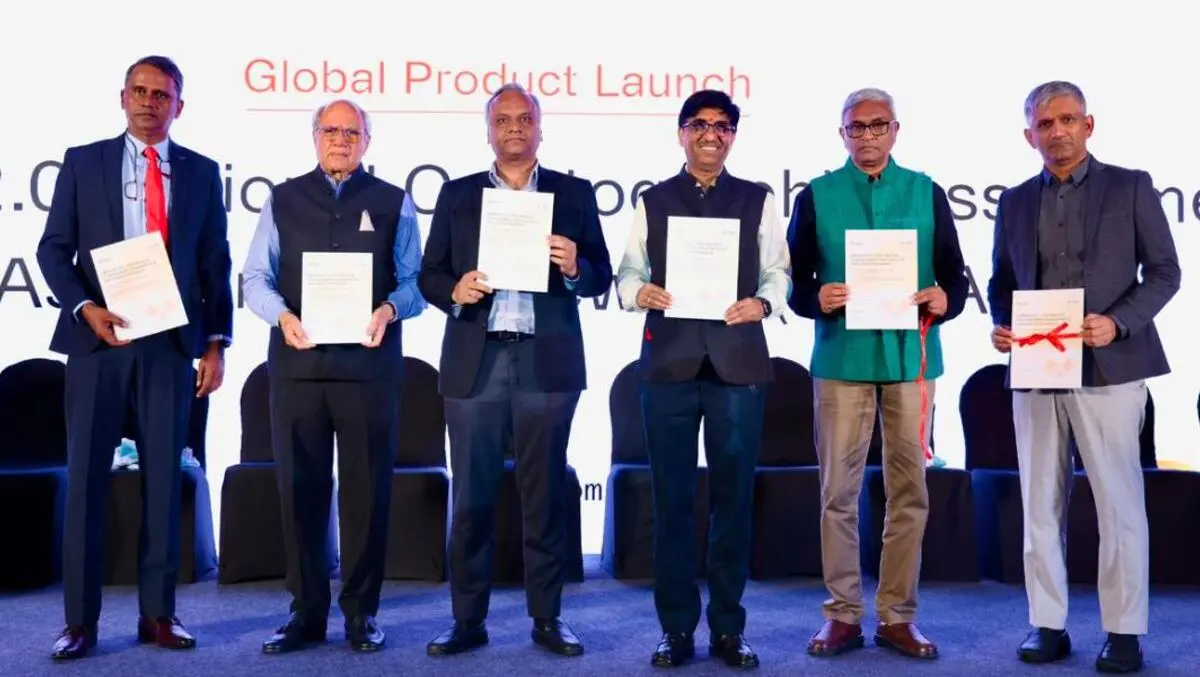
QNu Labs launches QShield 2.0 for quantum-safe crypto
Fri, 2nd Oct 2026
QNu Labs has launched QShield 2.0 in Bengaluru, a platform that underpins the company's National Cryptographic Assessment & Assurance Framework.
The launch comes as India moves towards post-quantum cryptography, with a National Quantum Mission task force recommending that critical infrastructure sectors begin formal implementation by 2027.
QShield 2.0 is designed to support what QNu describes as a continuous process of cryptographic discovery, risk assessment and assurance. The framework is organised around three processes - Discover, Assess and Assure - to help organisations identify cryptographic assets across their systems, score them against quantum and classical risks, and validate them continuously rather than through periodic audits.
Many organisations still cannot produce an accurate account of the cryptography used across their estates, a gap that is becoming more pressing as governments and companies prepare for a future in which quantum computers could undermine widely used encryption standards.
Industry forecasts cited by QNu place the arrival of a cryptographically relevant quantum computer capable of breaking RSA-2048 between 2030 and 2035. Against that backdrop, QShield 2.0 is being positioned as a tool for organisations seeking to map cryptography across legacy and current systems before beginning a broader migration.
The framework runs on five modules within QShield 2.0: Quantum Entropy, Quantum Readiness Risk Assessment, Quantum PKI, Quantum Vault and AI Security. According to QNu, the AI Security module addresses cryptographic risk in AI models and autonomous agents.
Policy backdrop
The launch comes as India sets out a more formal timetable for building quantum-safe infrastructure. The Department of Science and Technology, under the National Quantum Mission, has published a task force report on implementing a quantum-safe ecosystem in India. It recommends that critical infrastructure sectors begin formal post-quantum cryptography implementation by 2027.
That recommendation is especially significant for sectors such as banking, financial market infrastructure and government systems, where long-lived data and complex technology estates can make cryptographic transitions difficult. References to early deployment accounts from banks and security depositories suggest QNu is targeting institutions with heavy regulatory obligations and large installed bases of encryption technology.
Priyank Kharge, Hon. Minister for Home, Information Technology & Biotechnology (IT/BT), and E-Governance, Government of Karnataka, said, "Quantum technology is moving from the realm of research into practical applications, and cybersecurity will be one of the most critical areas of this transition. As organisations prepare for a quantum-resilient future, they need visibility into their cryptographic infrastructure and the ability to assess and strengthen it continuously. QNu, being Karnataka's first deep-tech quantum security startup and India's pioneer in quantum security, is also a global leader in quantum physics and post-quantum cryptography. Platforms such as QShield 2.0 will play an important role in enabling this transition while strengthening Bengaluru's position as a hub for deep-tech innovation."
Ajai Chowdhry, Chairperson of the National Quantum Mission, linked the product to the wider policy agenda.
A capability like a discovery, assessment and assurance framework is exactly the kind of outcome the National Quantum Mission was set up to enable - indigenous, sovereign and ready before the deadline arrives, not after,
Chowdhry said.
Commercial focus
QNu framed the new version of QShield as a response to customer uncertainty about where to begin with quantum-readiness work. Its approach starts with identifying cryptographic assets and dependencies, then measuring exposure, and finally supporting regular validation of controls.
Sunil Gupta, Founder & Chief Executive Officer, QNu Labs, said, "The quantum era is forcing us to rethink digital trust. The challenge is no longer just encrypting data, but knowing where cryptography exists, how resilient it is, and how quickly it can adapt to emerging threats. QShield 2.0 addresses this gap by evolving into a National Cryptographic Assessment and Assurance Framework - bringing cryptographic discovery, risk assessment, quantum readiness, crypto-agility and continuous assurance into one unified platform. Our goal is simple: help organisations move from assuming they are secure to continuously knowing and proving they are secure."
Rahil Patel, Chief Growth Officer, QNu Labs, said, "Every customer conversation this year started the same way: they knew a deadline was coming and didn't know where to begin. NCAAF is built to answer that first question - where does your cryptography actually live - before anything else."