

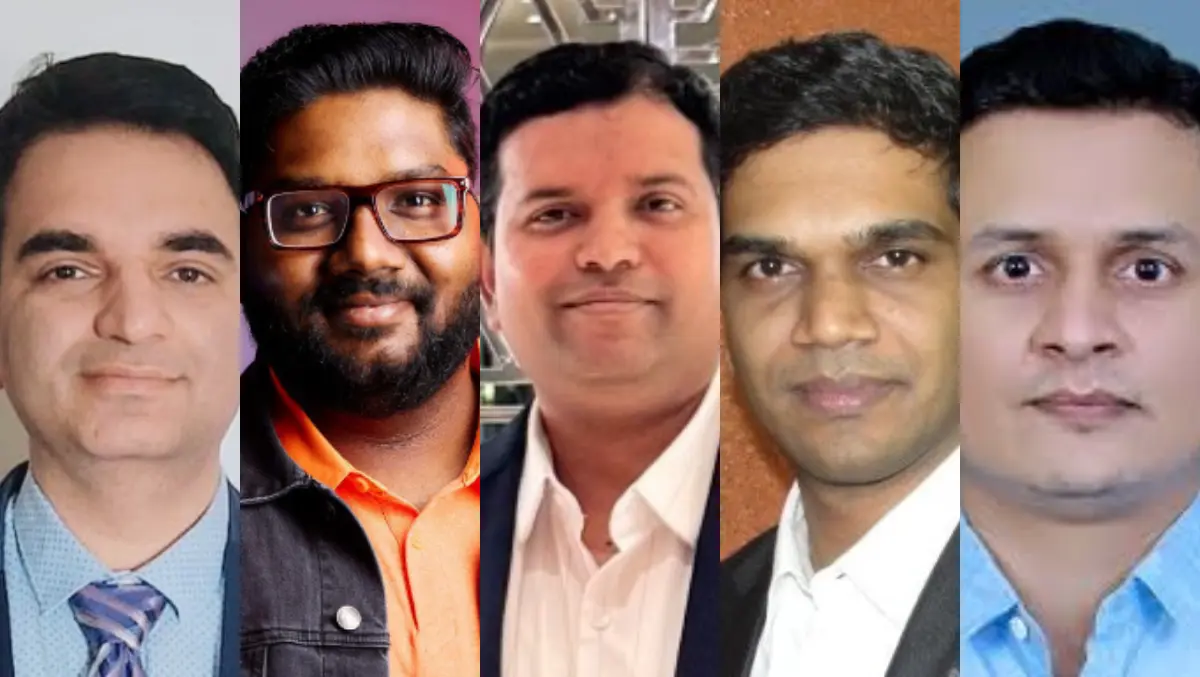
JFrog unveils Mumbai speaker line-up on AI software risks
Thu, 7th May 2026
JFrog has unveiled the speaker line-up for its EveryOps Day Mumbai gathering, which will bring together technology leaders from Indian companies and global software groups.
Participants include executives from GitHub, HDFC Bank, Infosys, Tata Motors, InMobi, Axis Bank, EdgeVerve and MoEngage, alongside JFrog executives and industry analysts. The event will focus on how large organisations can manage software security and governance as they adopt artificial intelligence across development and delivery processes.
Indian businesses are under pressure to introduce AI tools into software pipelines while retaining oversight of code, data and automated processes. JFrog is framing the discussion around trust in software delivery, particularly as enterprises begin using AI agents and AI-generated code in production environments.
The debate is becoming more urgent as companies expand automation in engineering teams. Gartner predicts that by the end of 2026, up to 40% of enterprise applications will be integrated with task-specific AI agents, up from less than 5% today, according to JFrog.
Risk and Control
Several sessions will examine the operational and security risks that come with AI adoption. EdgeVerve BISO Ashok Kumar Ratnagiri and GitHub Field CTO APAC Karthik Rameshkumar are due to discuss how to manage risks tied to AI-generated code and autonomous agents operating inside software pipelines.
Another discussion will examine governance and toolchain changes within organisations. HDFC Bank SVP IT Lester Fernandes and MoEngage VP Platform Engineering Aditya Chandra are expected to address quality, scale and auditability as businesses incorporate AI into software delivery.
Infosys SVP Naresh Choudhary is due to outline how the company is embedding agentic AI into software pipelines at scale. Tata Motors GM Connected Cars Vaisakh Venugopal is expected to discuss customer examples related to software supply chain modernisation and the use of AI in large organisations.
Axis Bank AI Platforms Head Kapil Talreja, InMobi SVP Technology Arvind Jayaprakash and Principal Analyst Janaki Raman are also part of the programme. Their session will explore how agentic workflows could reshape software delivery over the next three to five years and how enterprises should respond.
Enterprise Focus
The line-up reflects growing interest among Indian corporates in formalising controls around software development as AI moves from experimentation into day-to-day operations. Banks, manufacturers, software services groups and digital platforms face different regulatory and operational constraints, but all share a need to trace how software and models are built, tested and released.
That challenge has become more visible as generative AI tools move closer to core engineering work. Companies must now consider not only vulnerabilities in code, but also the provenance of AI models, the behaviour of software agents and the governance standards applied across development teams.
Sunny Rao, SVP APAC at JFrog, said many businesses are not prepared for the scale of the shift. "AI is unlocking extreme velocity in software delivery, but it is also introducing new risks at scale that traditional DevOps and security controls were never designed to handle," he said.
Rao said the event is intended as a forum for practical discussion among large organisations. "EveryOps Day is where India's leading enterprises come to solve these problems together, exploring practical ways to unify development, security, and AI into a single, trusted software delivery practice," he said.
JFrog is best known for tools used to manage software artefacts and software supply chains, and has increasingly positioned itself around security and governance as AI enters development environments. The Mumbai gathering reflects a wider industry shift, with infrastructure and developer tool vendors trying to address concerns over how AI systems are introduced into enterprise production settings.
The participation of large Indian names such as HDFC Bank, Infosys and Tata Motors underlines how far the discussion has moved beyond technology specialists. Questions of auditability, risk management and control are now being treated as board-level and operational issues, especially in regulated sectors and companies with complex global software estates.
For many of these organisations, the central issue is no longer whether AI will be used in software development, but how to set boundaries around its use without slowing releases or weakening accountability. The Mumbai programme is built around that tension between speed and control.