Security Posture stories
Fragmented defences are leaving most security teams unable to trace sensitive data after incidents, according to Netskope research.
Customers facing tighter IT budgets may see a sharper focus on practical returns as Matt Clarkin takes over sales and marketing at Canon Business Services.
Hong Kong saw a record 15,877 cyber incidents in 2025 as AI speeds attacks and shortens the window to exploit software flaws.
Customers can now run their own AI agents against Elisity's platform to continuously verify Zero Trust policies and spot drift faster.
Pressure is mounting on businesses to secure AI data and recover faster after cyber incidents, as static labels and ad hoc restoration prove too slow.
Cloud security teams are under pressure to act faster as vulnerabilities are being exploited within hours of disclosure, Sysdig said.
The tie-up aims to help security teams turn validated AI findings into ranked fixes before vulnerabilities pile up and attackers move first.
The suite aims to cut security backlogs and tighten oversight of AI agents as companies face a surge in machine identities and fragmented tools.
Security teams face a wider visibility gap as Tenable adds Google Gemini, MCP and AI coding tools to its exposure management platform.
Security teams face a widening gap as most leaders expect AI agents to outrun guardrails within a year, Rubrik said.
Security teams face a sharper risk from hidden AI agents as Cyera says non-human identities in Fortune 500 companies jumped 480% in six months.
Rising use of digital payments is forcing fintechs to tighten controls as executives warn that weak access, AI and fraud defences are exposing customers.
Fewer firms are overestimating OT security maturity, as only 14% can see their environments fully and gaps are coming into focus.
Organisations using Wayfinder Frontier AI Services will now get help turning validated vulnerabilities into prioritised fixes and post-deployment checks.
Rising spend on generative and agentic AI is being hampered by weak governance, with only 17 per cent of CIOs fully confident in controls.
Enterprises get a tamper-proof backup layer for AI use, as Keepit says verified data can reduce risk and support audits.
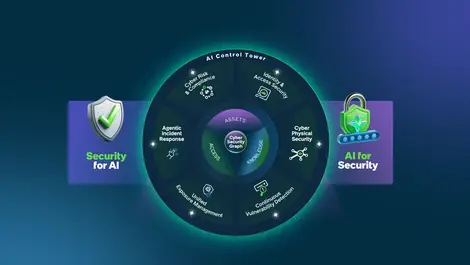
Rising AI-driven threats are pushing firms to consolidate security operations, as ServiceNow adds automation across exposure, identity and incident response.
The platform targets firms struggling to govern AI agents and machine identities, as Saviynt tops USD $300 million in annual recurring revenue.
Businesses are being warned that publicly exposed staff data can now fuel phishing and deepfake fraud without breaching internal systems.
The update aims to cut remediation costs and stop teams wasting time by re-analysing vulnerabilities without enough business context.

















.webp)