National Security stories
Fans will get round-the-clock venue help as the software firm deepens its public sector AI push, with defence revenue up 80% year on year.
The purchase gives the Australian group a US manufacturing foothold as Washington moves to favour domestic battery supply chains.
The shift to enterprise AI has lifted Vection to its first full-year operating cash flow and a stronger pipeline worth more than AUD $10.6 million.
Australia has launched a taskforce after an AI agent accessed non-public Medicare files and other government data, Albanese said.
The recognition comes as nearly 92% of Asia Pacific enterprises say data governance and compliance have delayed or cancelled AI projects.
Smaller operators are carrying much of the danger as a new study finds 66% of assessed US telecoms fall into an elevated risk band.
Ageing technology is leaving critical services exposed as AI lets attackers exploit known weaknesses at machine speed, experts say.
Regulated organisations can keep wireless WAN telemetry and management data inside their own environments, easing compliance concerns.
With most operators exposed to basic flaws, the paper warns telecom networks could face the same low-effort intrusions seen in US water systems.
The cash will accelerate global hiring and deepen Xapien's US push, as half its revenue already comes from American clients.
Australian utilities face sharper scrutiny as cyber incidents and supplier failures threaten outages, compliance breaches and market stability.
Canada should focus on the AI infrastructure pieces that matter most, executives say, rather than insisting every link in the supply chain be domestic.
Australia's AI rules may decide whether businesses gain protection without extra red tape that slows deployment and pushes investment offshore.
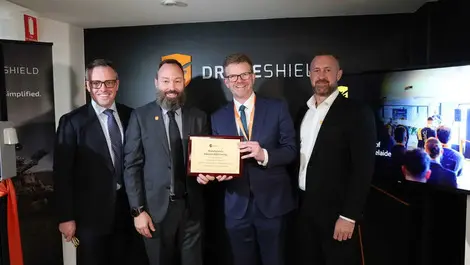
The AUD $13 million site will widen DroneShield's engineering reach as demand grows for counter-drone systems and skilled staff intensify.
Smaller firms could face more frequent attacks if access to advanced models stays limited to government agencies, Huntress says.
Access to research tools and fresh funding will help Convert Technologies expand tracking systems for defence customers operating beyond GPS coverage.
Australia's defence spending surge will only build sovereign capability if procurement rules give local firms a genuine path to prime contracts.
Alert-led security teams risk falling behind as AI now needs to be built into the SOC's core to stop attacks earlier and preserve sovereignty.
The hire signals FIOR's push to win governments and big enterprises worried about control, resilience and security in autonomous AI systems.
The hire deepens Thrive's push into cybersecurity as customers seek outside help with threat detection, response and risk management.