

Pan IIT Alumni urges graduates to back India's deep-tech
Thu, 14th May 2026
Pan IIT Alumni India has urged IIT graduates to play a bigger role in India's deep-tech sector as the country marked National Technology Day.
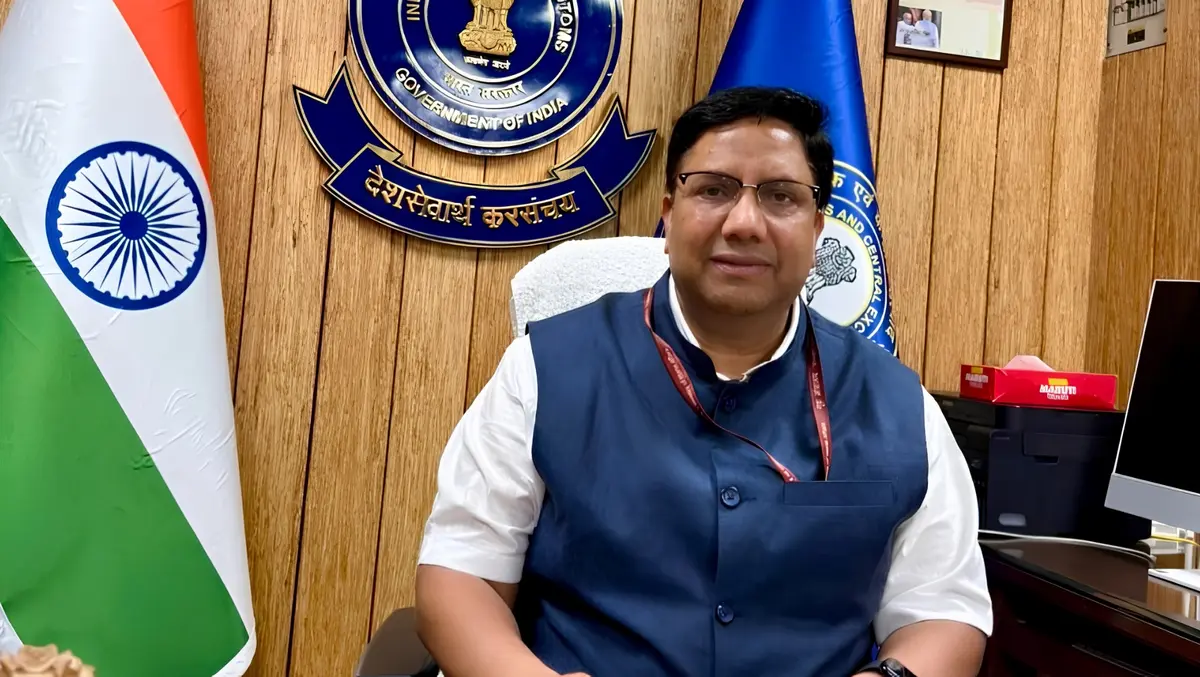
On the occasion, Prabhat Kumar, chairman of Pan IIT Alumni India, called on alumni to shift their focus from software services to research-led fields such as quantum computing, advanced materials and semiconductor manufacturing.
His remarks came amid a wider national debate on technology policy, research spending and industrial self-reliance. Government data released for the occasion showed India's goods and services exports reached about Rs. 73.1 lakh crore in financial year 2025-26, including merchandise exports of about Rs. 37.6 lakh crore and services exports of about Rs. 35.5 lakh crore.
The Economic Survey 2025-26 also highlighted a gap in research funding, noting that India's research and development spending remained at 0.64 per cent of GDP. That figure has kept the issue of long-term innovation investment in focus.
Budget priorities have added to the debate. The Union Budget 2026-27 set defence spending at Rs. 7.85 lakh crore, underscoring continued emphasis on technology, manufacturing and strategic sectors.
Kumar said this policy backdrop marked an inflection point for India's technology base.
"Today, we are witnessing a defining moment for India's technological renaissance. The government's launch of the National Quantum Mission, alongside the 'SHAKTI' policy framework and the historic Rs 1.2 lakh crore R&D allocation, marks a bold leap toward deep-tech self-reliance," Kumar said.
He also addressed the role of Indian engineers and researchers working overseas.
"The days of incremental coding and service-led growth are giving way to an era of fundamental science, hardware, and systems that will define the next half-century. I urge each one of you to pivot toward deep-tech research-quantum algorithms, post-quantum cryptography, advanced materials, and indigenous fab lines. Let us build not just for India, but with India's intellectual rigour. Let us mentor the next generation, file patents, and commercialise breakthroughs from our labs," he said.
Research push
Pan IIT Alumni India represents graduates of the Indian Institutes of Technology and serves as a common platform for alumni across the IIT system. It brings together members from business, academia and government through technology and entrepreneurship programmes.
Kumar's comments reflect a broader concern in Indian policy and industry circles that the country must move beyond service-led growth to strengthen its position in strategically important technologies. Quantum science, chip fabrication, materials research and secure computing are increasingly central to that discussion.
National Technology Day carries symbolic weight because it marks the anniversary of the Pokhran-II nuclear tests, often cited by policymakers as a milestone in India's scientific and strategic development. In his message for the day, Prime Minister Narendra Modi said the tests reflected India's "scientific excellence and unwavering commitment" and described technology as a "key pillar in building a self-reliant nation." He also called scientists the "true architects of the nation's pride and self-respect."
The language of self-reliance has become a recurring feature of India's economic and industrial policy, shaping debate on domestic manufacturing, defence production, critical technologies and the role of publicly backed research.
Kumar also appealed to corporate India, arguing that private sector participation will be needed to turn research ambitions into commercial results. He urged business leaders to support the National Quantum Mission by funding academic chairs, sponsoring deep-tech incubators and creating sabbatical pathways for IIT alumni to return to research.
The appeal highlights a longstanding challenge for India's innovation system: linking academic science, industrial finance and product development at scale. While the country has built a strong reputation in software and services, policymakers and industry groups increasingly argue that future competitiveness will depend on a deeper domestic base in science-led industries.
For Pan IIT Alumni India, the message was aimed at a constituency with influence across Indian and global technology networks. Kumar's call sought to position IIT alumni not just as participants in established sectors, but as contributors to research, patents and commercial work in emerging strategic fields.